What is Local SEO for a Dental Practice?
Local SEO, or Search Engine Optimization for Dentists, is a targeted digital marketing strategy that helps increase the visibility of a dental practice in location-based search results. This is like when someone searches for:
- “dentist near me,”
- “root canal treatment [city],”
- or “emergency dental clinic,”
The search platforms utilize localized algorithms to determine which practices should appear first.
Unlike traditional SEO designed for global or national ranking signals, local dental SEO focuses entirely on geographic proximity and relevance. Local SEO is actually highly valued.
A report says that around 80% of local searches result in conversions and turn into leads. A strong local SEO strategy increases visibility in the Google Local Pack and improves map rankings.
How Local SEO Works for Local Dental Practices
Local SEO mainly works in a few segments:
i) The Map Pack (Google 3-Pack):
This is the most visible section when you search topics in the Google search bar. When you search for something like “best pizza in New York,” Google shows a map with pinned locations and highlights the top three nearby stores.
Basically, it appears above traditional website listings, and you will see high-intent actions like phone calls, appointment bookings, and direct navigation requests. This results in lead acquisition.
ii) Geographic Proximity:
Google utilizes real-time location signals to determine how close a user is to dental clinics. These signals refer to GPS data, mobile network information, and IP-based location. So even if a patient does not type a city name, it automatically shows nearby providers based on physical distance.
iii) Localized Organic Results:
Just below the Map Pack, you will see standard organic website listings. With local SEO practice, these pages are ranked, especially specific service pages such as Invisalign, implants, or emergency dentistry pages.
iv) AI Overview & Answer Engines:
In the era of AI search, systems now use AI-driven retrieval methods to extract relevant information directly from websites.
They scan both structured data and natural text to generate instant answers. For example, with clear, well-structured content, you can get featured in AI summaries and improve conversions.
Why Is Local Seo Important For Dental Practices?
Local SEO has a direct impact on the dental practice’s success and lead generation. According to the report, 76% of people who search “near me” visit a business within 24 hours. So, local SEO is here work as an effective process through which you can put your dental practice in front of nearby patients at the exact moment they are searching for a dentist.
- A well-executed dental SEO strategy typically generates a 3x to 10x return on investment.
- Even from our own experience working with dental practices, more consistent branding and local SEO can drive a 40–60% increase in new patient appointments.
- Another report says that practices targeting specific services like “teeth whitening” or “Invisalign” through SEO can see up to a 42% higher conversion rate compared to general targeting.
- Moreover, with advanced, more mobile-optimized strategies, you can drive this result up to a 60% increase in appointment bookings.
- Even every part of this local SEO brings measurable outcomes. For example, 56% of dental websites with informative blogs see 3x more organic traffic.
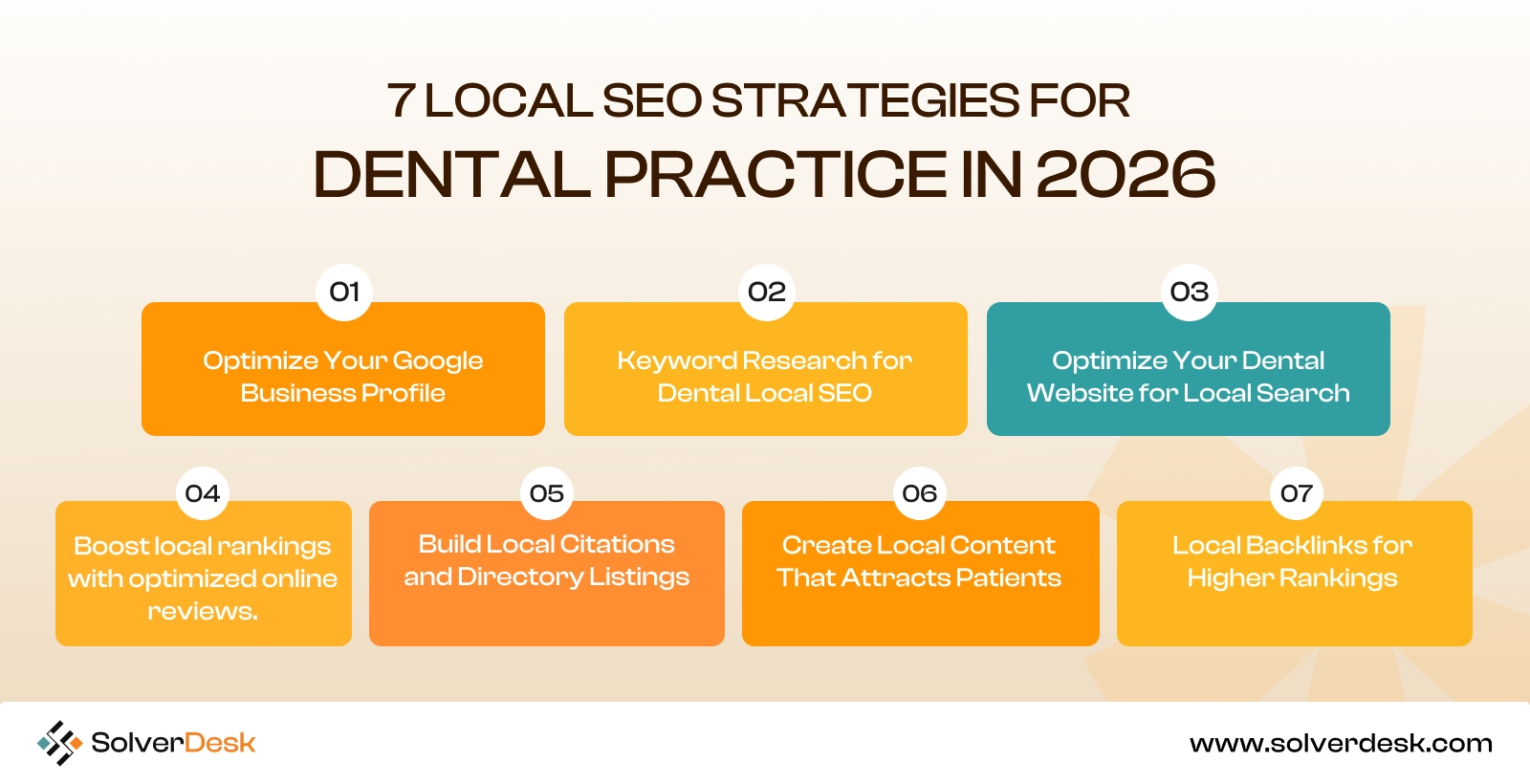
7 Local SEO Strategies for Dental Practice in 2026
1. Optimize Your Google Business Profile
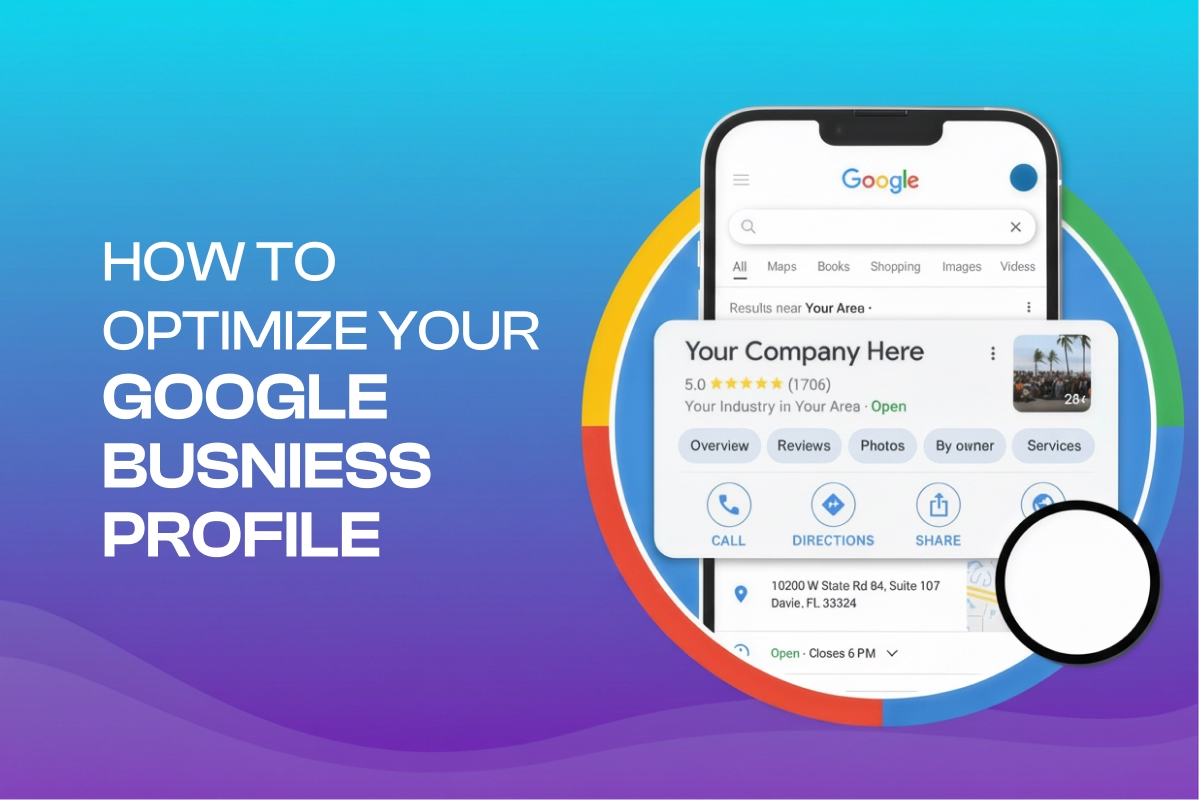
The Google Business Profile is one of the most influential ranking factors for local SEO. This is because when someone near you searches for “dentist near me” or “emergency dentist in [city],” Google basically displays the Local Pack before even the organic results. If your practice appears there, that’s a win, and you will receive phone calls or direct website visits. This is known as a zero-click search.
Effective Google Business Profile optimization is all about building trust and maximizing local visibility. For this,
- You must choose your primary business category carefully, like a dentist.
- Select secondary categories like Cosmetic Dentist, Pediatric Dentist, Dental Implants Provider, or Emergency Dental Service based on your services.
- Keep your business profile consistent with your practice name, address, phone number, website, and office hours.
- Optimize your business description with proper local SEO keywords and explain what makes your practice unique.
2. Keyword Research for Dental Local SEO
Keyword research is the foundation of every successful local SEO strategy. But one thing to note is that it is no longer about finding one exact phrase.
Google has become more sophisticated and now targets topics, entities, and search intent. So, to win here, instead of targeting a single keyword like “dentist in Miami,” you have to build pages that naturally cover related terms such as:
- Treatments (“dental implants”)
- Symptoms (“bleeding gums”)
- Costs (“Invisalign cost”)
- Insurance
- Emergency care (“emergency dentist near me”)
- Nearby locations
Local SEO experts recommend grouping queries into topical clusters instead of creating separate pages for similar keywords. When you do keyword research, identify closely related entities and modifiers that belong together. Build your keyword list around these semantic relationships to ensure broader topical coverage.
3. Optimize Your Dental Website for Local Search
Your real estate website is likely the core asset that brings your local relevance to where you are and what services you offer. This is even more important when the conversion rate for the dental industry is actually very low, around 1–3%. Your dental website should not just describe your practice.
A professional website design and optimization for a dental practice includes the following:
- Its own dedicated page, optimized for a specific treatment and location.
- If you have multiple offices, give each one its own page with a unique address and local content.
- Link related service and location pages together.
- Add local business and dental schema so that search engines interpret your practice details.
- Fast loading speeds, mobile responsiveness, HTTPS security, and a clean site structure.
- Well-optimized content, focusing on helpful, reliable information that even Google recommends to benefit people and help with rankings.
4. Optimize Online Reviews as a Powerful Local Ranking Factor
According to a survey of 500 Americans between the ages of 18 and 65+. When they were asked how they’d pick a dentist from a Google search, 43.3% chose “best online reviews,” and 18.4% chose “top-ranked in search results.
Your reviews from your patients are a powerful local SEO factor. They help Google understand both the relevance and prominence of your dental practice within a local area.
Instead of focusing on the star rating, you can encourage your patients to add feedback mentioning your treatments and local experience.
Reports even say that businesses with about 50+ reviews are 266% more likely to appear in the Local Pack than businesses compared to those with fewer reviews.
For instance, a quick action checklist:
- Send review requests within 24 hours of treatment.
- Ask one open-ended question in every request.
- Review recurring phrases and neighborhood mentions. Like “same-day crown,” “Invisalign consultation,” “emergency dentist.”
- Update service pages with relevant patient language.
- Respond to every Google review within 48 hours.
5. Build Local Citations and Directory Listings
Citations are mentions of your practice’s name, address, and phone number, and through them, you can get leads. The more consistent and widespread your citations are, the stronger the trust signals you build.
To build an effective citation profile:
- Claim and fully complete your listings on major data aggregators first.
- Focus on healthcare-specific directories, such as Healthgrades, Zocdoc, WebMD, and Vitals.
- Make sure you list your practice on general directories too, like Yelp, Bing Places, Apple Maps, and Yellow Pages.
- Above all, add your practice to dental association directories.
- Run a citation audit at least twice a year to find and fix duplicate listings.
- Most importantly, keep your categories and business descriptions consistent with your Google Business Profile.
6. Create Local Content That Attracts Patients
Beyond all of the above tactics, you have to publish location-specific content that will help connect your practice with the community you serve.
As per a recent survey, 43% of patients rely on word of mouth to find dentists, while about 28% of respondents use online searches and review platforms to find dentists.
So, it is obvious that your content must not be stuffing city names into generic blog posts.
Rather, modern search platforms and AI-driven answer engines prioritize real-world experience and hyper-local context over keyword volume.
Here are some expert strategies you can utilize in content marketing:
- Publish content focused on regional problems and local guides, like cost breakdowns specific to your city or neighborhood-specific insurance accepted at your clinic.
- Organize content with a Q&A conversational structure. For example, use headings like “What counts as a dental emergency in [Neighborhood Name]?”
- When outlining office locations or parking options, mention recognizable local landmarks, transit lines, or prominent intersections.
- Add original photography of your actual team, treatment rooms, and real case studies in the content as local proof.
7. Local Backlinks for Higher Rankings
In 2026, search engines and AI algorithms focus only on domain authority to evaluate local prominence. What matters most now is geographical relevance.
For that, you need to build local backlinks, meaning gaining links from trusted digital hubs within your immediate community.
This would be like a link from a neighborhood association or a local sports league, through which you can showcase that your practice is an active part of the community.
To build a high-impact local link profile for a dental practice:
| Strategy | How It Helps |
| Sponsor Local Events | Earn backlinks from sponsor pages of youth sports teams, schools, and community events. |
| Partner with Local Businesses | Exchange links with nearby healthcare providers and local businesses through resource pages. |
| Join Local Organizations | Get listed on the Chamber of Commerce, business associations, and dental organization websites. |
| Share Expert Insights | Publish oral health tips on local blogs, community news sites, and neighborhood forums to earn relevant backlinks. |
Technical SEO Tips for Dental Practices
Your dental website should be fast and well-structured to help search engines and AI platforms correctly understand and recommend your practice to the right patients.
Here are some essential technical SEO tips from our top SEO experts that you should follow:
Improve Interaction to Next Paint (INP):
Optimize all interactive elements of your site and ensure the site responds within 200 milliseconds. This improves Core Web Vitals performance and supports mobile-first rankings.
Implement Dental Schema Markup:
Beyond generic setup, use advanced structured data such as MedicalOrganization and MedicalWebPage schema to clearly define your services and treatments.
According to Google Search Central, it makes your pages eligible for many special features in Google Search results, like review stars.
Maintain Full Mobile Content Parity:
Ensure mobile and desktop versions are fully synchronized with identical text, images, links, and schema markup. There should be no indexing gaps, ensuring consistent visibility for both smartphone users and AI crawlers.
Use the BLUF Content Structure:
It is a good strategy to place the key answer or takeaway at the beginning of each section, followed by supporting context and detail. This improves readability, increases snippet eligibility, and enhances retrieval by AI-driven answer engines.
How Long Does Local SEO Take to Work for Dentists?
Most dental practices see first ranking movements in 3–4 months. You will see the map pack visibility by months 4–6, and consistent patient growth from organic search between months 6–12.
Have a clear overview from the table below:
| Timeline | What You Can Expect |
| Week 1–4 | Profile setup, directory listings, website fixes |
| Month 1–2 | Google starts re-evaluating your practice online |
| Month 3–4 | First keyword rankings appear in local search |
| Month 4–6 | Practice appears in Google Map Pack regularly |
| Month 6–12 | Rankings stabilize, new patient calls grow monthly |
| Month 12+ | Results compound month over month |
Should You Hire a Dental Local SEO Agency?
Yes definitely. If you’re serious about growing your practice, local SEO requires technical expertise, consistent execution, and tools most dentists don’t have time to manage to get proper results. An agency handles all of it while you can focus on patients.
At Solver Desk, we specialize in turning dental practices into dominant local brands. Starting from optimizing your Google Business Profile to building a search presence, building location-specific service pages, and fixing technical site issues, we handle every task.
Our local SEO strategies are built specifically around how today’s patients find and choose their dentist online. So without thinking twice, book a free consultation and let your practice dominate the local pack.
Frequently Asked Questions
Is local SEO different from regular SEO for dentists?
Yes, there is a broad difference between local SEO and regular SEO. Local SEO targets patients within your city or neighborhood specifically. It is focused on Google Maps rankings, “near me” searches, and location-based keywords.
What is the Google Local Pack and why does it matter for dentists?
It’s the top 3 business listings Google shows with a map for local searches. These 3 spots capture over 42% of all clicks. If your practice isn’t in them, most nearby patients searching right now will never see you.
Should dentists focus on SEO or Google Ads to get more patients?
Here, both have different impacts on the practice. Google Ads brings immediate visibility but stops the moment you stop paying. Local SEO builds rankings that keep generating patient calls month after month at no cost per click.